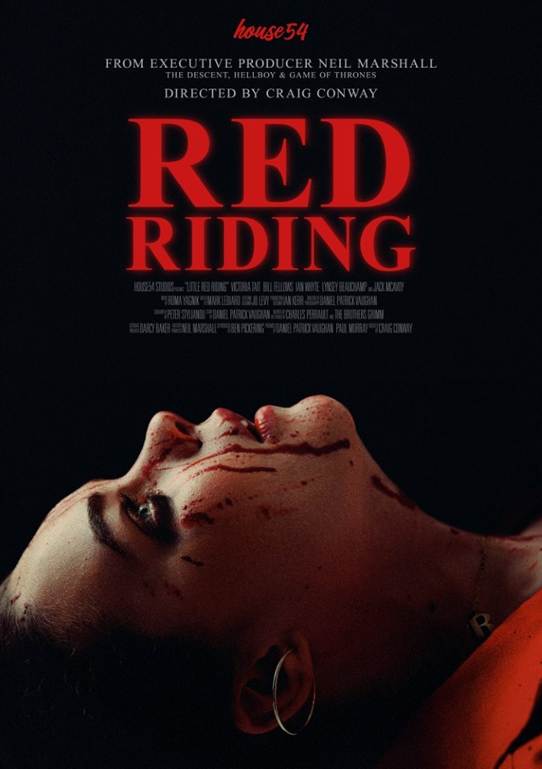
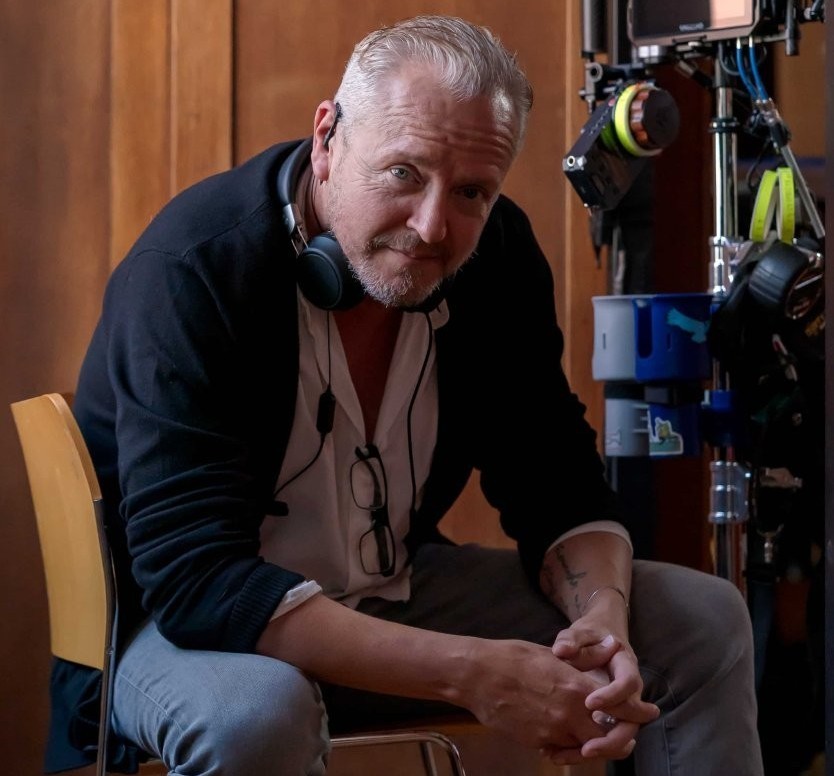

Ahead of the World premiere of Red Riding, a horror-thriller that reimagines the classic Little Red Riding Hood fairytale, screening at FrightFest Glasgow 2026, director Craig Conway reflects on dark explorations, industry challenges, and championing the Northeast. The following is a syndicated interview.
RED RIDING is a morally complex, unsettling reimagining of Little Red Riding Hood. What drew you to the project?
I wasn’t interested in retelling a fairy tale, I was interested in what the story doesn’t say. Red Riding is about survival, power, and the moment innocence fractures. The brilliant Peter Stylianou with whom I worked with on “Drained” had written and created an exciting script and concept which after working together with producer Daniel Patrick Vaughn back and forth seemed to take it somewhere truly special, dark but special. The fairy tale framework gave us permission to explore the themes without softening them.
I’m always drawn to stories that sit in the grey, where there are no clean heroes or villains. This film isn’t about punishment or morality; it’s about what people become when they’re forced to endure and Horror lets you tell emotional truths without asking for permission.
This is your feature directorial debut. What stands out looking back?
Directing a feature taught me that leadership is emotional, not technical. The job isn’t just about framing shots, of course that’s also integral to it but it’s about creating an environment where people feel safe enough to take risks.
Coming from acting, I was very aware of how exposed performers can feel. I carried that responsibility seriously. If Red Riding works, it’s because everyone involved trusted each other to go to uncomfortable places together and cast and crew alike were more than willing on this project.
Was there a scene that was particularly challenging or meaningful to bring to life?
The quiet moments were the hardest. Without giving too much away, there are scenes where nothing “happens” on paper, but everything is happening underneath. Those moments live or die on restraint.
In horror, there’s a temptation to push, to escalate, explain or underline. I wanted to do the opposite. The most unsettling things are often what you’re left alone with.
How important was location and atmosphere in shaping the film’s tone?
Atmosphere wasn’t decoration, it was the foundation. The landscape needed to feel indifferent, isolating and slightly hostile.
The Northeast for the first section of the film gave us that truth for free. Filming Reds original home in the area I grew up in was also a way for me to connect personally on the journey I was actually looking to capture.
When we moved to Scotland near Nairn on the estate for the main block it added even more honesty to the story, so it doesn’t flatter you and it doesn’t apologise that suited the film perfectly and actually became another character in and of itself.
Victoria Tait gives a striking debut performance as Redelle. How did you discover her?
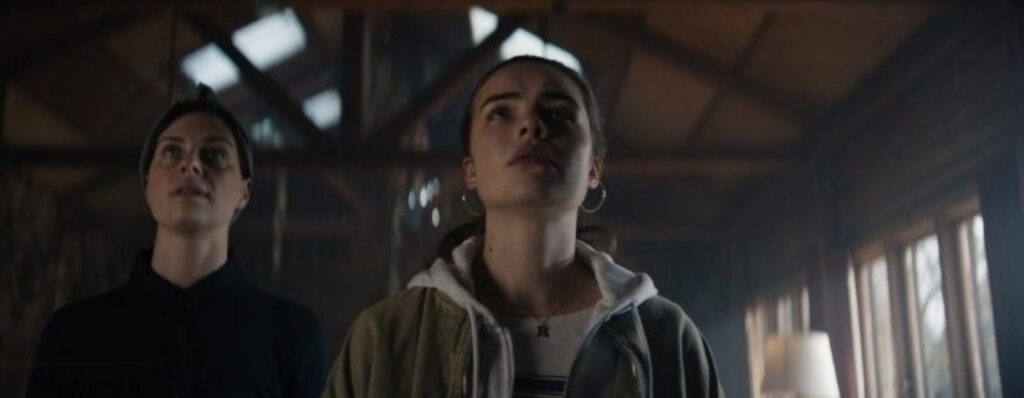
Victoria has an extraordinary stillness. She doesn’t signal emotion, she allows it. That’s incredibly rare, especially in a debut lead. From the many incredibly talented actresses we saw, Victoria connected in a way I’ve not seen before.
She was fearless in her approach. She didn’t try to make the character likeable or palatable. She trusted the material and committed fully and that integrity is what makes the performance resonate. She’s a true talent that’s for sure.
FrightFest audiences know you as an actor from films like Dog Soldiers and The Descent. Do you still plan to act, and is horror still important to you?
Acting will always be part of me but directing feels like a natural evolution as it has for producing features. It allows me to shape stories from the inside out rather than from a single point of view.
As for horror, I don’t think of it as a genre so much as a language. It’s a way of talking about fear, power and identity without pretending things are neat or safe.
You’ve worked closely with Neil Marshall over the years. How did he come on board as a producer?
Neil Marshall has been a huge part of my career, and my life to be honest, so his involvement came from trust rather than strategy. He understood the film immediately and backed it without trying to reshape it. For a first-time feature director, having that kind of support without interference is invaluable.
You’ve founded CM3 to support filmmaking in the Northeast. What are your ambitions for it?
CM3 (Creative Motion) exists because talent shouldn’t have to leave home to be taken seriously. We’re focused on building a sustainable ecosystem supporting emerging voices and creating pathways for creatives and students.
It’s about infrastructure as much as storytelling. Red Riding is proof that ambitious, challenging films can be made outside traditional centres if the support system is there and it’s imperative we support the independent sector not just with horror but across all genres if we are to keep finding new talent.
How has your relationship with the industry changed over time?
Early in my career, I waited for permission. Now I’m beginning to build the work I want to see.
The hardest lesson was realising that longevity doesn’t guarantee agency. You earn that by being clear about who you are and what you’re willing to fight for. Once I stopped trying to fit into the industry’s expectations, my relationship with it has become far healthier.
Finally, what’s next?
More directing, producing, acting and more building. I’m developing further projects that continue to explore human stories through genre, while expanding the production infrastructure in the Northeast. For me, the goal now is sustainability, creative, personal, and regional. My aim isn’t just to make films, it’s to make a future where films can keep being made.
RED RIDING is showing at the Glasgow Film Theatre on Sat 7 March, 5.30pm, as part of FrightFest Glasgow 2026. Craig will be attending.