
Visionary director Luc Besson (The Fifth Element, Léon: The Professional) is back, and he’s traded the sci-fi neon and hitman grit for something far more elegant, atmospheric, and ultimately, heartbreaking. His latest work, Dracula (originally titled Dracula: A Love Tale), strips away the familiar layers of the vampire hunter trope to reveal a sprawling Gothic romance spanning nearly 500 years.
I managed to catch an early screening ahead of its February 6, 2026, North American release. While it is undeniably one of the most beautiful films I’ve seen, it left me with as many questions as it did chills.
A Tragedy of Eternal Grief
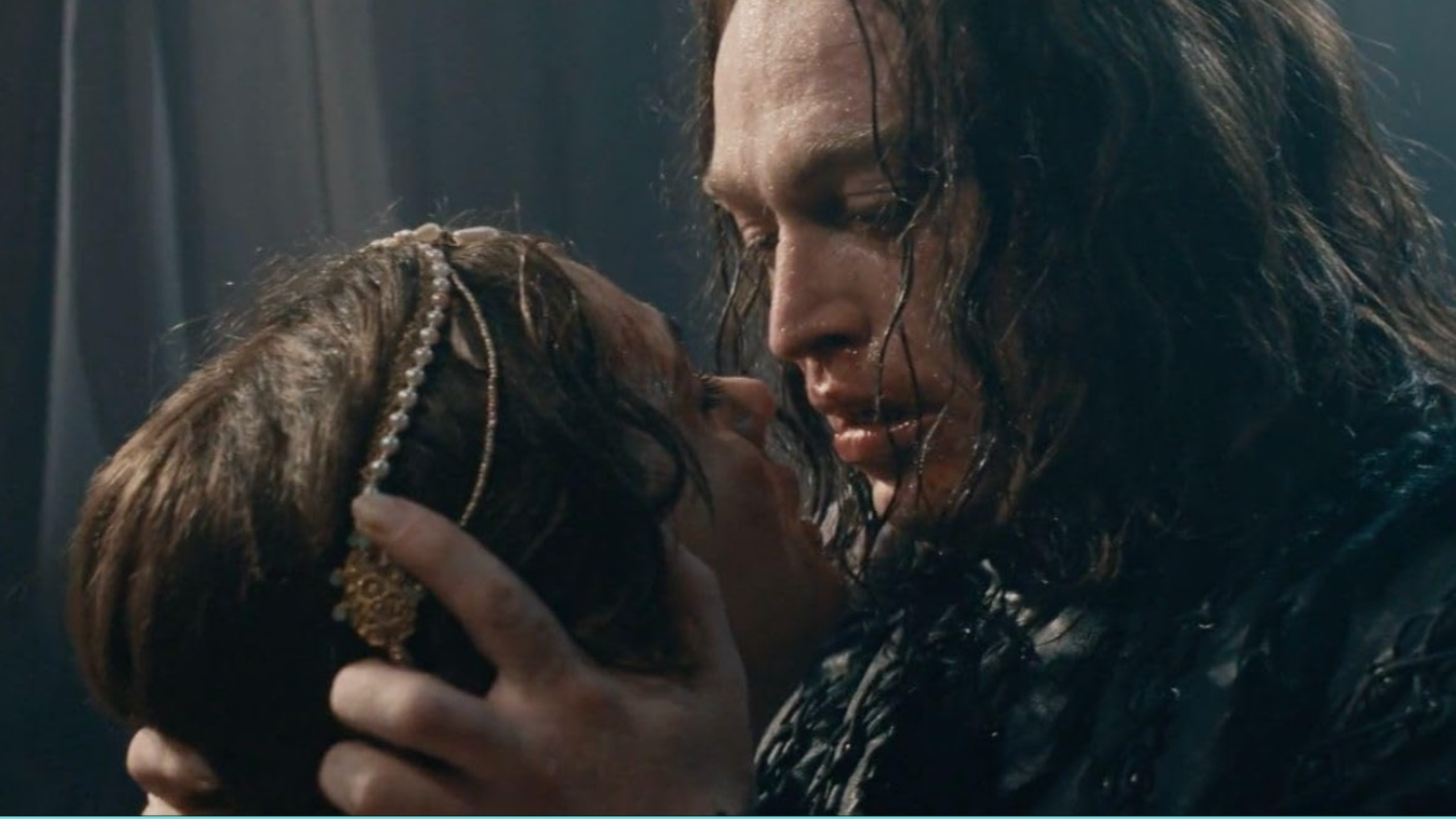
In this version, Besson isn’t interested in a predator stalking the night. This is a tragedy about a man who could not say goodbye. We’re introduced to Prince Vladimir (played by a transformative Caleb Landry Jones), a man defined by his absolute devotion to his wife, Elisabeta (Zoë Bleu). When she is cruelly taken from him, his grief becomes a force of nature.
Vladimir doesn’t embrace darkness because he craves power or blood—he chooses damnation as a rebellion against a world that took his soulmate. He renounces his faith and his mortality because he refuses to let their love end. For centuries, he has existed as a ghost in the shadows, fueled by insurmountable sorrow, until he encounters her reincarnation in the Victorian era.
Visual Grandeur and Stellar Performances
Besson has always had an eye for spectacle, and this is easily his most opulent work to date. The production design is a lush fever dream, blending historical accuracy with a haunting Gothic fantasy aesthetic.
Caleb Landry Jones is a powerhouse, portraying Vladimir’s journey from noble prince to tormented immortal with raw, anchoring intensity.
Zoë Bleu pulls double duty as both the original Elisabeta and her modern-day reincarnation, serving as the film’s emotional compass.
The cast is rounded out by the always-impressive Christoph Waltz, who plays the priest hunting the legendary vampire.
The “Romantic Imperative vs. Common Sense
The film explores the idea that love is powerful enough to bridge the gap between life and death. It positions immortality not as a gift, but as a life sentence served in solitary confinement. It’s poetic and grand—right up until the final act.
Here is where the film lost me. After spending 400 years searching through the ages for his “eternal love,” the conclusion feels like a massive letdown. Without giving too much away, Vladimir essentially chooses to allow himself to be killed. I understand the “sacrifice” angle, but after such an epic buildup, it feels like a total waste.
His soulmate just remembered who she was and rediscovered a love that conquered time, only to have it ripped away again. Are we supposed to be happy that she’s left to live an “average” life, pining for him for the rest of her days? It’s a total punch to the gut.
Also, while we’ve seen many Dracula movies, Besson tries to give us something new with an army of living gargoyles. Honestly? It’s a bit of a stretch. It veers away from the intimate, poetic tone of the rest of the movie and lands squarely in “CGI spectacle” territory.
The Verdict
Dracula is worth watching for the sheer beauty of the filmmaking alone. It is a lavish, intense experience for those who believe in “love forever.” However, don’t go in expecting a happy ending or a logical resolution. It’s a stunning visual feast, but the ending might leave you scratching your head.
.