
Sometimes, the truth is more disturbing than a camera can capture. And people are more evil than any movie villain could be. That’s the case with the disturbing real historical story that inspired the new Well Go USA film 731.
The film explores the human experimentation conducted at Japan’s notorious Unit 731, which remains one of the darkest and most horrifying chapters in human history. Now, 731 will take audiences inside the camp. Its intent? To draw attention to the sheer depravity through the eyes of a prisoner forced to act as an interpreter.
Survival in a Living Hell
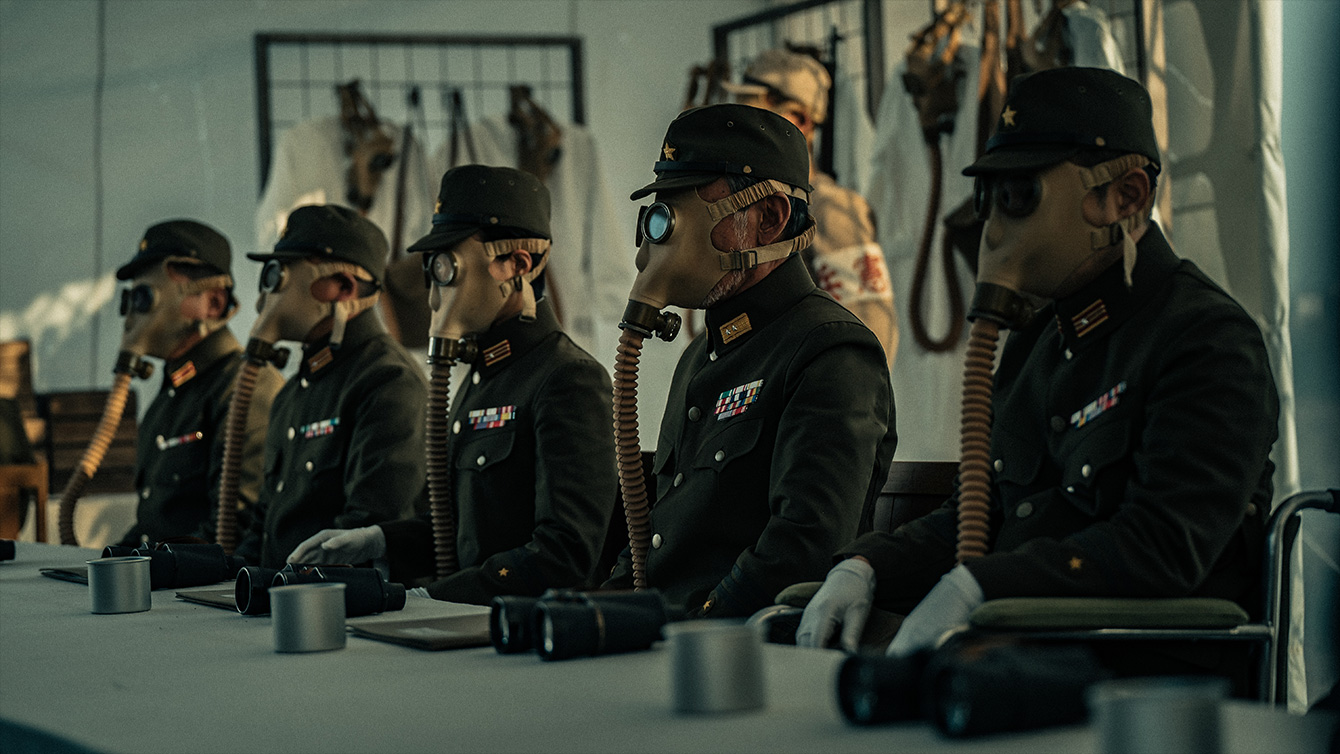
Set inside the notorious Japanese Imperial Army compound, the film explores the absolute limits of human corruption. The group’s mission? Developing biological and chemical weapons. In the film, we experience this harrowing story through Wang (played by Wu Jiang), a prisoner assigned to be an interpreter for his fellow captives. In the film, Wang is tasked with bearing witness to unspeakable suffering.
The film features a powerful ensemble cast including Wu Jiang (Dragon), Zhiwen Wang (Battle of the Warriors), Naiwen Li (The Adventure), Qian Sun (Three Weddings), and Ziye Lin (My Blue Summer).
Written and directed by Zhao Linshan (The Assassins), 731 debuts on Digital on April 7, 2026, from Well Go USA Entertainment, with an exclusive Amazon release on Blu-ray and DVD scheduled for June 2.
The True Story: What Was Unit 731?
The Compound
Unit 731 was a covert warfare research and development unit of the Imperial Japanese Army during World War II. Based in the Pingfan district of Harbin (now in northeast China), the facility masqueraded as a lumber mill and a water purification center.
The Real Victims
Over 250,000 Chinese and Korean prisoners of war, as well as civilians, were subjected to inhumane experiments and brutal deaths. Researchers and doctors referred to the victims as “maruta” (Japanese for “logs”). This is a dark reference to the facility’s cover as a lumber mill. It was yet another way to dehumanize prisoners.
The Experiments
The events at Unit 731 were among the most gruesome war crimes ever documented. Want a few examples? Innocent people were taken outside in freezing temperatures with their limbs exposed and doused with water. Limbs would freeze solid, so that frostbite could be studied. Another example, some were subjected to surgeries and organ removals without anesthesia. It doesn’t stop there. Some victims were intentionally infected with diseases to test treatments. Those illnesses included the plague, cholera, anthrax, and tuberculosis. Prisoners, including children, were tied to stakes at varying distances to test the effectiveness of grenades, flamethrowers, and bombs. How deadly was Unit 731? After entering its gates, not a single prisoner ever escaped with their lives.
The Aftermath
At the end of the war, Unit 731’s facilities were blown up to destroy evidence of their crimes. In a highly controversial move, the United States granted immunity to many of the lead researchers and physicians of Unit 731 in exchange for their data on biological warfare. This allowed many of the perpetrators, sadly, to go free and live out their lives without ever facing a war crimes tribunal.