Netflix has officially commissioned a bold new unscripted series based on one of the most controversial studies in psychological history. Titled “The New Stanford Prison Experiment,” the six-episode docuseries is set to premiere on October 21. Variety reports that the series revisits the core psychological questions of authority and submission through a modern lens. The series features six 45-minute unscripted episodes that push the boundaries of social experiment television.
Power, Control, and the Dark Side of Human Nature
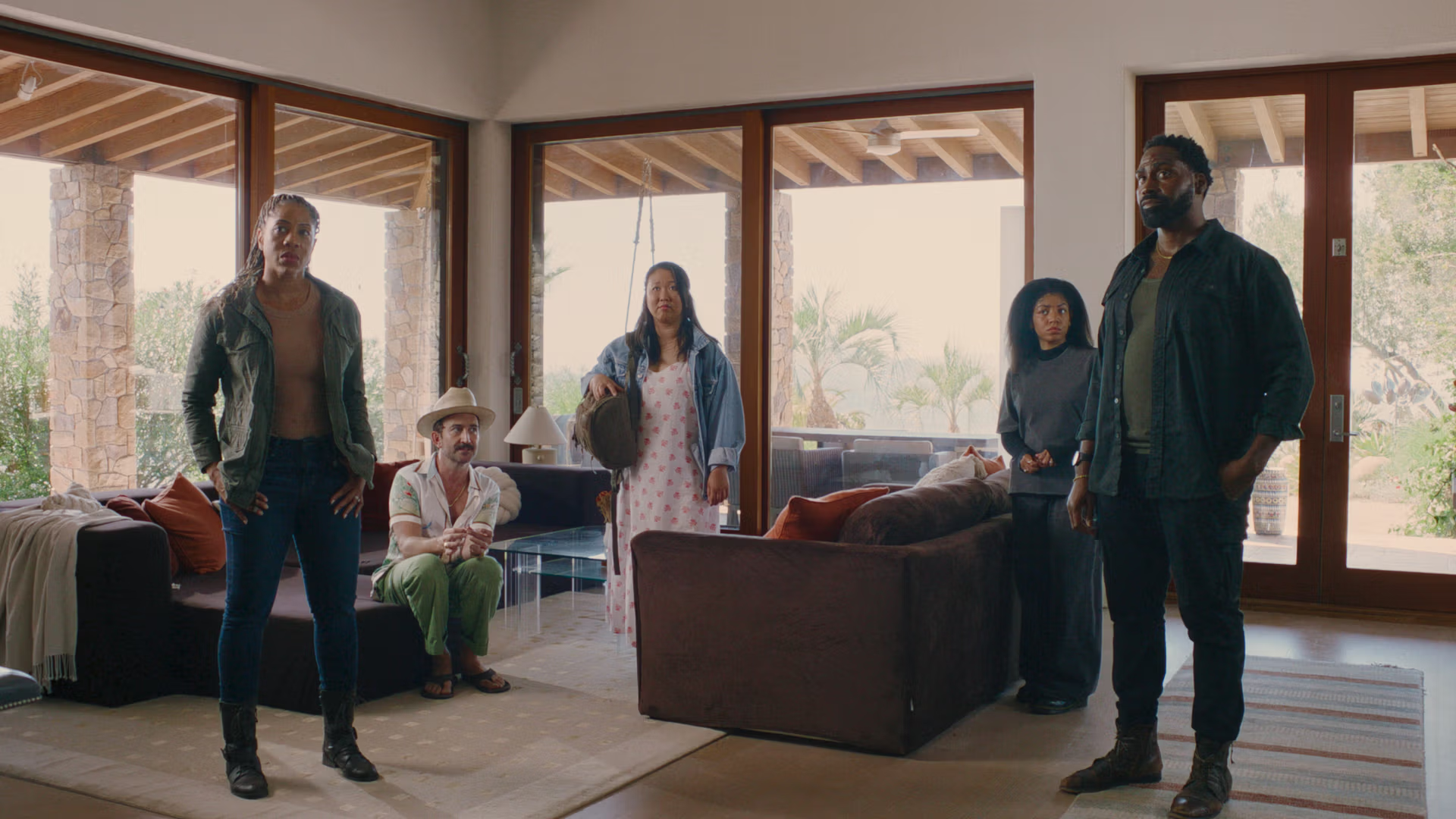
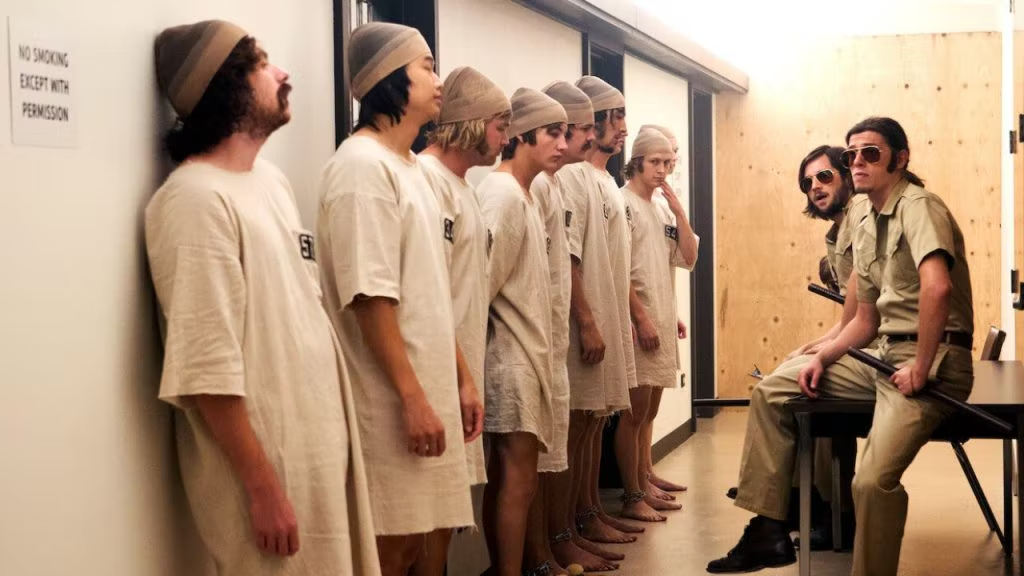
The series places thirty willing participants inside a real prison environment. It randomly assigns them to act as either guards or inmates. Thrust into a rigid system of hierarchy and control, the group must navigate the psychological pressure of their roles. As the balance of power shifts, the social experiment explores whether individuals inevitably conform to systemic authority. Or whether empathy, morality, and personal identity can withstand the corrupting influence of absolute power.
A Legacy of Controversy and Ethical Flaws
The unscripted series draws inspiration from the original 1971 study conducted at Stanford University by psychology professor Philip Zimbardo. Intended to run for two weeks, the original trial was halted after just six days due to severe psychological abuse inflicted by the guards and extreme emotional distress suffered by the prisoners. The fallout from the 1971 study ultimately led to modern ethical guidelines for human testing. The story has previously inspired books, documentaries, and a 2015 feature film starring Billy Crudup. However, this new project aims to test if human nature has evolved when faced with the ultimate test of authority.
Behind the Scenes of the Production
Executive producers Jane Lipsitz, Dan Cutforth, Nan Strait, Dan Volpe, Jeff Grogan, and Mike Odair lead the production team at Alfred Street Industries. Lipsitz described the project as one of the most intense and thrilling experiences of her career, highlighting that while the original experiment had deep ethical flaws, its core question about how power impacts human choice remains deeply relevant today. Audiences can stream all six episodes of “The New Stanford Prison Experiment” when it debuts globally on Netflix on October 21.
“The Stanford Prison Experiment has always fascinated me,” Lipsitz told Variety. “Despite its serious ethical flaws, it asked a fundamental question that feels even more relevant today: how does power affect ethical choices? Getting the opportunity to reimagine this social experiment was one of the most intense, exhilarating — and definitely nail-biting — experiences we’ve ever had. Netflix has always been an incredible supporter of ambitious projects that take risks, push boundaries and tell challenging stories, so we were incredibly grateful to have them as our partners on this one.”ter less than a week when those assigned to be guards began abusing those assigned as prisoners, among other ethical concerns. This and other experiments around the same time period led to the adoption of stricter rules to prevent harm to human participants.
There have been multiple books, documentaries, docuseries, and scripted adaptations of the original experiment. Among those is the feature film “The Stanford Prison Experiment,” which was released in 2015 and starred Billy Crudup as Zimbardo.