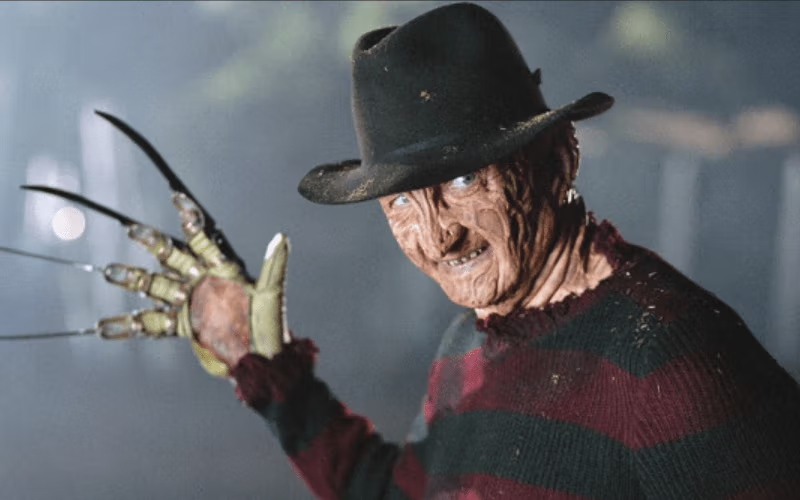
Freddy Krueger and the Nightmare on Elm Street franchise are the new targets of cancel culture. After four decades, people are now deciding he’s a bad guy (*eye roll). So, let’s talk about it.
Why is Freddy on the chopping block? Because thanks to a video game, a conversation began with people calling out the fictional character (as in, he’s not real) for being a pedophile.
Unraveling the Elm Street Lore
Wes Craven originally envisioned a darker backstory before changing the final script for the first film. The theatrical 1984 film explicitly presents the villain as a child killer, not a creep. Decades later, the 2010 reboot changed the character’s lore, turning him into a pedo. Let’s be honest, the movie crap to begin with, but controversy fuels ticket sales. What’s more, neither Wes Craven nor Robert Englund were involved with that movie. Samuel Bayer directed it, and Jackie Earle Haley played Freddy, and we all know how that went.
Robert Englund, who has long played Freddy, has explicitly clarified that his classic portrayal never reflected being an abuser. Conflating distinct movie iterations ignores how actors originally built the cinematic monster. Therefore, blurring these lore differences misrepresents the original cinematic character.
“Freddy’s not a pedophile — I never played him as a pedophile.” Englund told OUT during an interview in 2025.
Fictional Terror Versus Real Harm
Enjoying horror cinema does not mean approving monstrous actions in reality. Fictional antagonists serve as frightening obstacles meant to thrill audiences safely. Meanwhile, critics should target real harm rather than attacking imaginary screen monsters. For instance, the Jeepers Creepers creator, Victor Salva, is actually a convicted pedophile, which we covered in detail when his victim spoke out back in 2017. If you want to cancel someone real and not a FICTIONAL CHARACTER like Freddy, go after him. Targeting fictional killers while ignoring living offenders demonstrates deeply misplaced moral priorities. In contrast, real human suffering requires actual societal accountability.
Misdirected Cultural Priorities
Canceling fictional killers would eliminate more than 200 popular horror movies. Iconic series like Halloween, Friday the 13th, and IT regularly involve young targets. However, dark storytelling lets audiences explore fear safely without condoning violence. Meanwhile, real human suffering gets monetized across true crime entertainment while victims remain mostly forgotten. Audiences must distinguish between screen monsters and actual real-world harm. Real political scandals deserve far more public scrutiny.
The True Essence of Horror Fandom
Ultimately, horror fandom celebrates creative filmmaking, makeup design, and thrilling performances. Viewers recognize villains as bad characters, which explains why they feel scary. In fact, dark storytelling lets audiences process fear in a safe space. Enjoying a terrifying monster on screen never equates to approving real harm. Society must separate imaginary screen monsters from actual real-world crimes. Canceling one character, franchise, director, or actor because of one terrible reboot they had nothing to do with is simply ridiculous. That would be like canceling one person in the Epstein files and letting others slide. Oh, wait, that actually happened in the real world (*side eye).
If you actually want to explore the Nightmare on Elm lore for yourself, you can stream most of the films, including the original, on HBO Max.