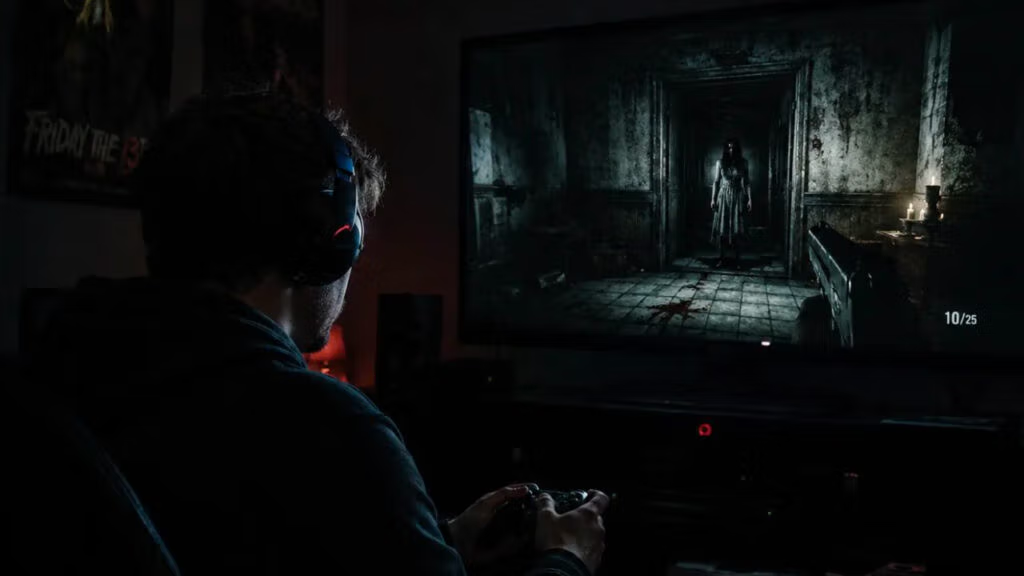
Jump scares are cheap. Anyone can make you flinch with a loud noise and a face in the dark. What really wrecks you is the slow-cooked kind of terror, the kind where every decision has weight, every bullet counts, and one bad call gets your whole squad killed. That is where tactical horror lives. These games do not just want to scare you. They want you sweating, whispering into your mic, and questioning every corner before you turn it.
Rainbow Six Siege X
It sounds strange to call a competitive shooter a horror game, but spend one round in a bomb site with a single defender left, and you will understand. Siege built its whole identity on dread. It is a tactical 5v5 of attack versus defense where walls come apart, floors give way, and death arrives in a single headshot with almost no time to react. There is no health regen to bail you out. There is no respawn. When you are the last one alive against three attackers, the fear is real, and it is entirely earned.
The horror here is psychological, and most of it comes from the ranked ladder. Ranked mode only opens at level 50, and every season resets you back near the bottom, so the climb never truly ends. A single clutch you fumble can undo an hour of grinding. That relentless pressure is exactly why so many players end up looking into Rainbow Six Siege boosting just to escape the lower brackets and reach lobbies where teammates actually call out intel instead of feeding. Whether you climb yourself or get a hand, the tension of a live-ranked round is as close to a horror movie as a shooter gets.
GTFO
If Siege is horror by accident, GTFO is horror on purpose. This one is not shy about it. It bills itself as a hardcore cooperative horror shooter, and the pitch is plain: stealth, strategy, and teamwork are the only things keeping you alive in a deadly underground prison.
You and three friends drop into the Complex, a sprawling subterranean facility crawling with hibernating monsters called Sleepers. Make noise, and they wake. Wake one, and you wake all of them. So you creep through the dark, scanning doorways, rationing ammo like a lifeline, forcing horrors through chokepoints, and praying your kill zone holds. Resources are scarce on purpose. There is no pay-to-win crutch, no overpowered gun to buy your way out of trouble. It is just you, your team, and a suffocating silence that breaks into pure chaos the second someone flinches.
Critics rewarded that cruelty, with the game landing generally favorable reviews and a cult following that treats each brutal expedition like a rite of passage. If four-player Lovecraftian dread is your thing, it is also worth watching the co-op Lovecraftian shooter The Mound: Omen of Cthulhu is worth watching too, chasing the same “corrupt your friends and shoot your way out” energy from a cosmic-horror angle.
Hunt: Showdown 1896
Nothing else feels like Hunt. Set in a rotting Louisiana bayou at the tail end of the 19th century, it fuses a tense extraction shooter with a monster hunt and then adds the worst variable of all: other players. You are tracking a bounty. So is everyone else. And you can all hear each other.
What makes Hunt so nerve-shredding is its sound design. Crows scatter when someone walks past. Dogs bark. A carelessly stepped-in puddle gives away your position across the map. You are constantly triangulating threats you cannot see, deciding whether that gunshot in the distance means an easy kill or an ambush. Then there is the threat of permadeath. Lose your hunter, and they are gone for good, along with their gear. Every fight carries the weight of everything you stand to lose, turning a simple tracking mission into a white-knuckle standoff where nobody wants to shoot first and reveal their position.
Phasmophobia
Proof that tactical horror does not need guns at all. Phasmophobia hands you a flashlight, a thermometer, a spirit box, and a very bad idea, then sends you into a haunted location to identify what is hunting you. It plays like a grim little detective procedure. Gather evidence, match it against a list of ghost types, and get out before the entity decides you have overstayed.
The tactics rely on coordination and restraint. You have to split up to cover ground, but the ghost grows more aggressive the longer you linger and the lower your sanity drops. Push too hard, and it starts a hunt, killing the lights and coming for you while you scramble for a hiding spot and try not to scream into voice chat, which the ghost can sometimes hear. Playing with friends does not make it less frightening. It just means you get to hear each other panic in real time.
Lethal Company
Lethal Company found a way to make capitalism the scariest monster in the room. You and your crew are sent to abandoned industrial moons to scavenge scrap and sell it, all to hit a quota set by a faceless corporation. Fail the quota, and you are ejected into the void. So off you go, into pitch-black facilities full of things that want to eat you, because the alternative is worse.
What sells the terror is how thin your margins are. A few key tools break up every run and force constant calls under pressure:
- The radar and monitor let one person guide the team, but that person is stuck at the ship, blind to their own surroundings.
- Walkie-talkies are your lifeline, right up until the static-loving monster hears them.
- Flashlights and batteries run out, leaving you feeling your way through the dark.
Every trip is a gamble between one more crate of loot and getting back alive. The proximity voice chat does the rest, turning coordinated scavenging into a comedy of errors that curdles into genuine panic the instant something starts chasing you.
Ready or Not
This is the odd one out on this list, but it belongs here. Ready or Not is not supernatural horror. It is the human kind. You lead a SWAT team through grounded, deeply unsettling scenarios, and the dread comes from how methodical it forces you to be. Kick a door without clearing angles, and you are dead before you see the shooter. Mirror under the door, ready your team, breach with flashbangs, sweep the room, and check your corners. Rush, and you will pay for it.
The environments are grim, and the stakes feel heavy, closer to a tense thriller than an action romp. It scratches the same itch as the rest of this list, the slow build of pressure where survival depends on discipline rather than reflexes, even if the only monsters are the ones who look uncomfortably real.
What actually makes them scary
Strip away the settings, and these games share one nerve: consequence. The horror is not the monster on screen. It is knowing that a single mistake, one loud footstep, one missed angle, or one wasted magazine can undo everything and drag your whole team down with you. That is the trade tactical horror makes. It swaps cheap shocks for sustained pressure, and it is a far harder feeling to shake once the game is off and the lights are back on.