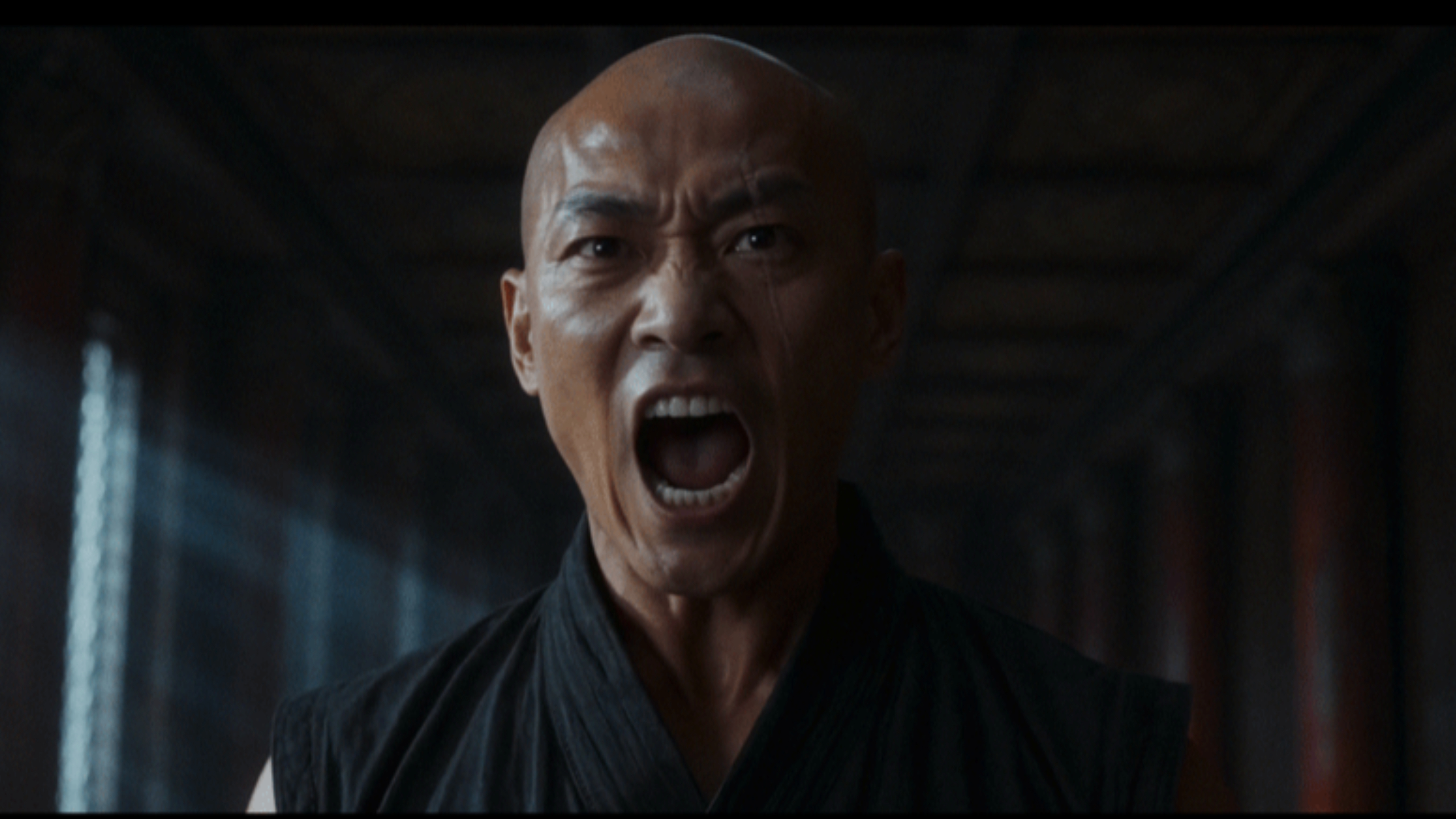

The landscape of filmmaking just got a massive, AI-powered shake-up. Following an exclusive industry preview at Cannes this past Saturday, the trailer for Hell Grind has dropped. But it’s not just an action-fantasy flick; it’s a history-making milestone.
Directed by Aitore Zholdaskali and co-written by Cannes veteran Adilkhan Yerzhanov, Hell Grindis is the world’s first AI-native feature film produced entirely on the Higgsfield platform.
A Portal to the Underworld
The story follows four street-smart thieves—Roco, Lulu, Jax, and Rein—whose latest heist takes a supernatural turn for the worse. When Roco accidentally triggers an ancient artifact, Lulu is sucked into a portal to the underworld. The ensuing globe-spanning odyssey takes our leads from a hidden Tibetan temple to the brutal landscapes of feudal Japan.
The film frames itself as “Fantasy as tragedy. Action as grief,” promising that, despite its high-tech production, it packs the same emotional punch as a traditional blockbuster.
By the Numbers: Precision Meets Efficiency
The production stats for Hell Grind are enough to make any studio accountant faint. The entire film was made for under $500,000 (including $400k in computer costs) and took 14 days to make.
The first 25-minute episode required 16,181 individual video generations to yield 253 final shots—a 64:1 curation ratio that proves AI filmmaking is less about “clicking a button” and more about artisanal, frame-by-frame labor.
Using a cocktail of Dreamina-Seedance 2.0 and Higgsfield’s proprietary Soul Cinema and Soul Cast models, the team proved that AI can finally handle what was previously impossible: long-form narrative arcs, consistent character design, and world-building that doesn’t fall apart after 30 seconds.
The Democratization of the Silver Screen
For director Aitore Zholdaskali, this isn’t just about cutting costs; it’s about breaking the gatekeepers.
“It took me ten years to get my first traditional feature made,” Zholdaskali notes. “Most people who started with me never made it. Making a movie today feels like making an album twenty years ago… but then the laptop changed music forever. That’s what Higgsfield is doing for filmmakers. The next generation won’t have to wait ten years.”
Higgsfield CEO Alex Mashrabov is equally bullish, positioning the film as a warning shot to the industry:
“Traditional production for a comparable film would cost about $50 million. Hell Grind cost us less than $500 thousand.”
Is This the Future?
While traditional Hollywood scrambles to figure out its relationship with artificial intelligence, Hell Grindis is already off and running. The film is part of a growing slate of AI-generated content hitting the festival circuit, with shorts already selected for the AI Film Awards in Cannes, Munich’s Camgarro Awards, and Seoul’s Waiff.
Whether you see it as the ultimate artistic liberation or a terrifying disruption of the industry, one thing is clear: the barrier to entry for making a feature film just fell off a cliff. The era of the “AI-native” blockbuster has officially begun.