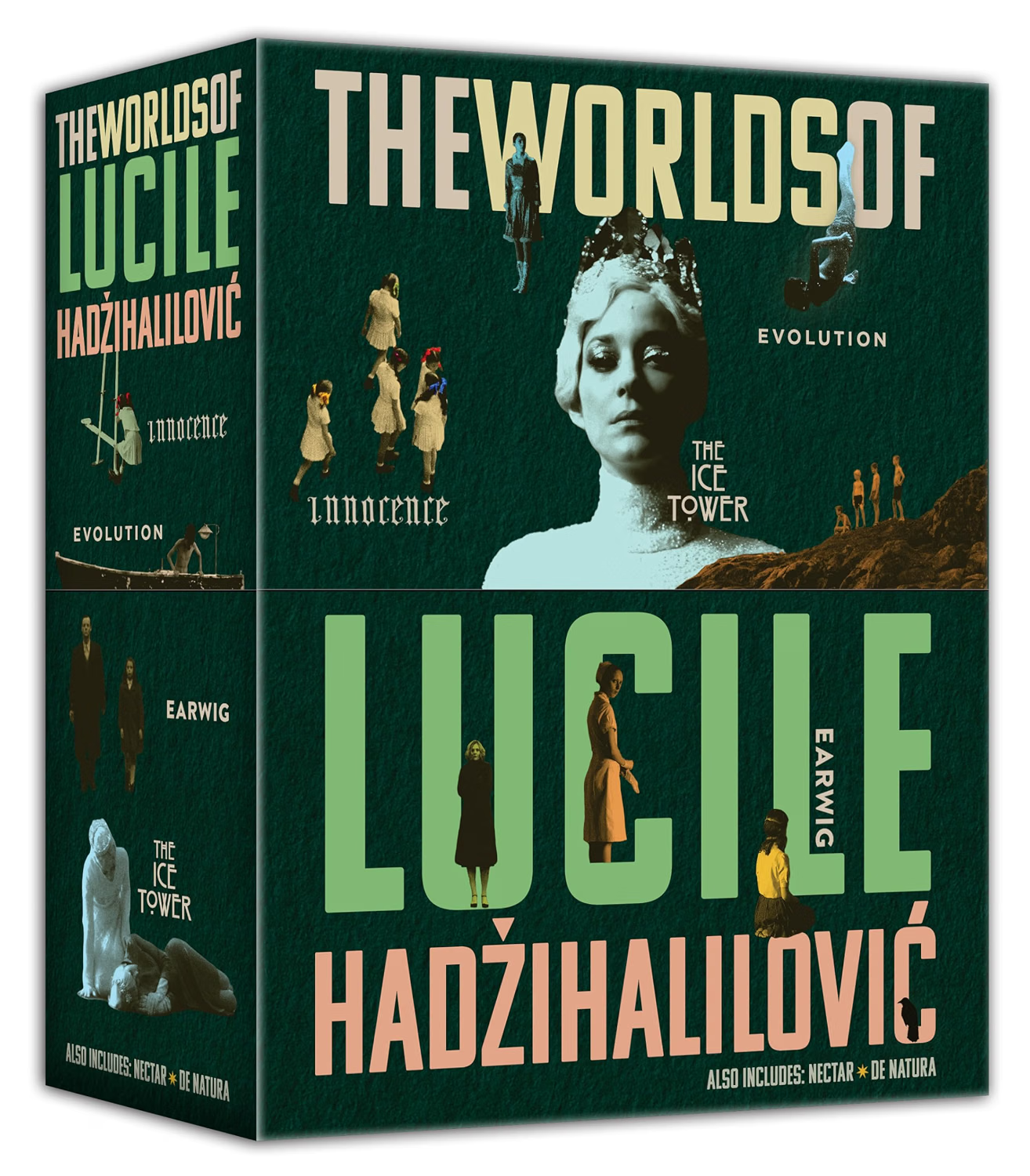
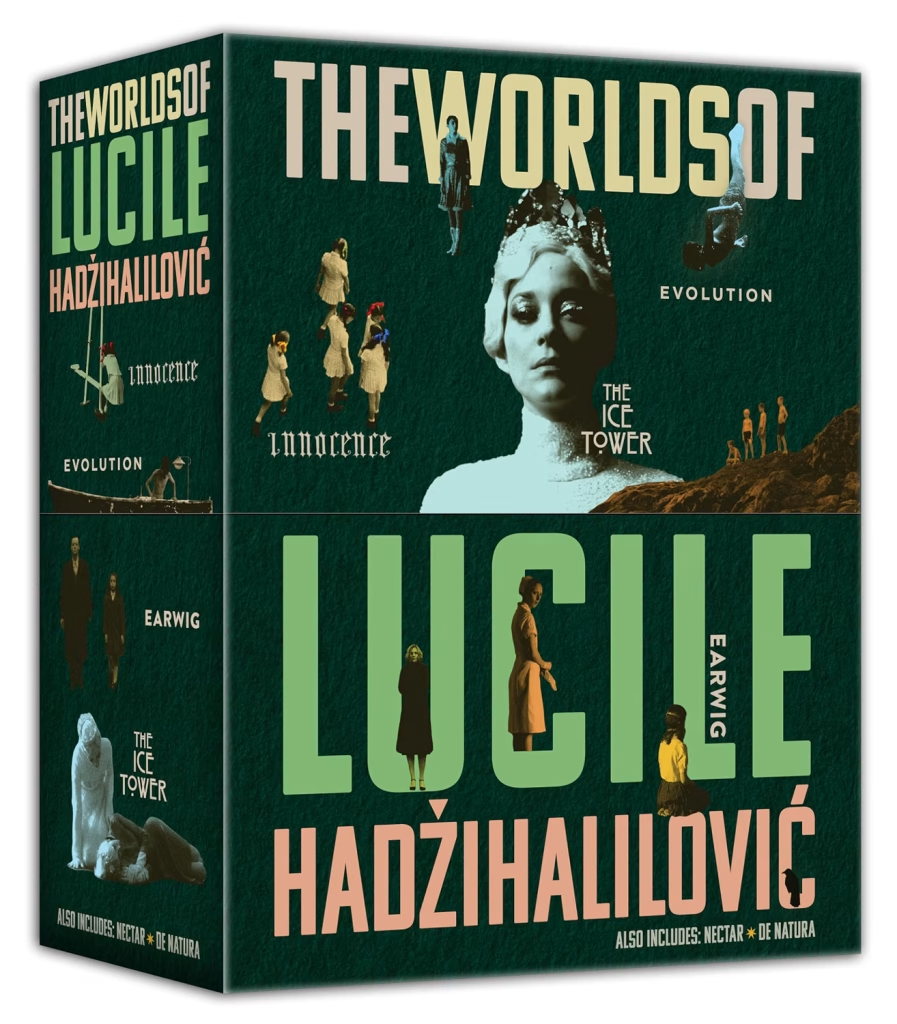
The fine fiends over at Severin have joined forces with Yellow Veil Pictures and together they have collected the film’s of French filmmaker Lucile Hadžihalilović; a set of unique and often surreal cinematic experiences that will make my usual “review style” hard to utilize (your mileage may vary on if that’s a good thing or not)…
Things kick off with 2004’s Innocence…
Young Iris (Zoé Auclair) arrives at an isolated school via coffin… and what a school it is, an isolated academy that teaches ballet and etiquette.
It also functions as a semi-prison wherein obedience is synonymous with happiness, and adults are present only to a limited degree… relatives never visit, and the older girls are the ones to look after the younger students.
The structure itself is surrounded by tall hedges that keep the outside world obscured and those within removed from the world… but that doesn’t stop the students from being curious as to what exists beyond the school’s grounds.
I know what you’re thinking, some of this sounds like Suspiria, and there is no denying Argento’s 1977 masterpiece is within Innocence’s D.N.A., but Hadžihalilović presents this yarn of childh lost and the consequences of going too far to satisfy curiosity with a surrealist semi-fairy tale vibe that’s drenched in dread, even when nothing menacing is directly occurring.
If hand-holding and explanations are your cup of tea, then your ass will surely die of thirst here, as ambiguity is the name of the game… which of course just keeps that dream-like aesthetic rockin’ and rollin’ along… and expect the pace to slow down often… but the bizarre world-building makes any notion of conventional storytelling rather moot anyway, and it’s all the better for it.
All of the films in the The Worlds Of Lucile Hadžihalilović box-set feature bonus material, and Innocence kicks of with an intro from Hadžihalilović (as does every feature film present here), followed by two of the Directors short films; De Natura and Nectar.
Following that comes an explanation of Innocence courtesy of Auclair, a video essay concerning the picture from film historian/critic Alexandra Heller-Nicholas, a Q&A sesh, and the film’s trailer.
Next comes Evolution from 2015…
Hadžihalilović flips the script this go-around, as our hero, Nicolas (Max Brebant), is a young boy… a boy who finds a corpse and a starfish, simultaneously, and then finds himself admitted to a dilapidated hospital after a violent outburst.
This seaside hospital is a real hoot n’ a half, what with the mysterious surgery performed on every patient… and the staff comprised of old women have a bit of that ol’ Innsmouth look so you just know they are up to something nefarious… and rather fishy (I mean that kinda goes with the territory).
Back again in Evolution is the slow burn, but Hadžihalilović cranks up the dread a great deal, and while the threats in Innocence were more nebulous, here the fantastic elements are more front and center.
The bleak seaside locales only add to the atmosphere here as we are presented with yet another surreal world just to the left of our own, but to contrast once again, the locale we find ourselves in here are resplendent in their rot and emptiness which gives things more of a horror vibe than the fairy tale adjacent setting of the school from Innocence.
Special features to accompany Evolution include a conversation between Cinematographer Manu Dacosse and Hadžihalilović, an interview with Screenwriter Alanté Kavaïté, and the film’s trailer.
Next comes Earwig from 2021…
Albert (Paul Hilton) is charged with looking after Mia (Romane Hemelaers), a girl with dentures made of ice which must be refashioned each day utilizing her saliva.
This misery loop of making ice teeth for Mia, and the discomfort it brings sends our hero to the pub to drown his sorrows, but is soon accosted by a man with a broken bottle, but a waitress named Celeste (Romola Garai) ends up inadvertently on the receiving end of the aggression.
This sends the narrative on separate paths of depressing down-spiraling… not that that differs from the films that came before…
This time Hadžihalilović is adapting a novel (by author Brian Catling) and the results are… get ready for this, slow paced and infinitely weird… filled with strange children and adults with unclear agendas (though here the older folk are even more sinister at times than those that have come before).
Once more we are offered clues, but little in the way of narrative to explain the goings-on of the strangeness we are plunged into, and the fact that the film features little dialog only adds to that fever-dream flavor that permeates most of this entire collection.
To enhance the experience of Earwig, the collection offers up interviews with Hadžihalilović, Co-Writer Geoff Cox, and Cinematographer Jonathan Ricquebourg… followed by the film’s trailer.
Last up we get 2025’s The Ice Tower…
In the ‘70s, inscrutable actress Cristina (Marion Cotillard) is helming her take on Hans Christian Andersen’s The Snow Queen, featuring herself in the eponymous role.
Meanwhile, a teen runaway named Jeanne (Clara Pacini) hides out in the studio where Cristina is working her cinematic magic… but before long the two become fascinated with each other as their lives begin to mirror Anderson’s fairy tale.
While Hadžihalilović’s themes and narrative flow are a bit more transparent here, you can still count on a phantasmagoric, slow burn that will have you trying to deduce if the elements of the story are actually occurring at all.
While the omnipresent foreboding vibe, and subverted coming-of-age elements are also front and present, some of the motivation of the characters are influenced by Andersen’s tale so there will be a bit less mystery for those familiar with the story… but the parallels between the film and it’s partial inspiration are fascinating to watch.
As is the way, we are provided some supplemental material to illuminate The Ice Tower including interviews with Ricquebourg and Hadžihalilović, a duo of Q&A sessions, a video essay courtesy of a returning Alexandra Heller-Nicholas, and the picture’s trailer.
Rounding out the package is a 60-page booklet featuring new writing about Hadžihalilović’s oeuvre from Critic Saffron Maeve, Author Alison Taylor, and Genre Film Historian Stephen Thrower.
If you like your neo-fairy tales served with a side of hallucinogenics and slowly mounting dread, The Worlds Of Lucile Hadžihalilović is definitely worth a wicked whirl!